
Getting paid · Admin
How to Read a Medical-Aid Remittance Advice
Published 10 August 2026 · 7 min read
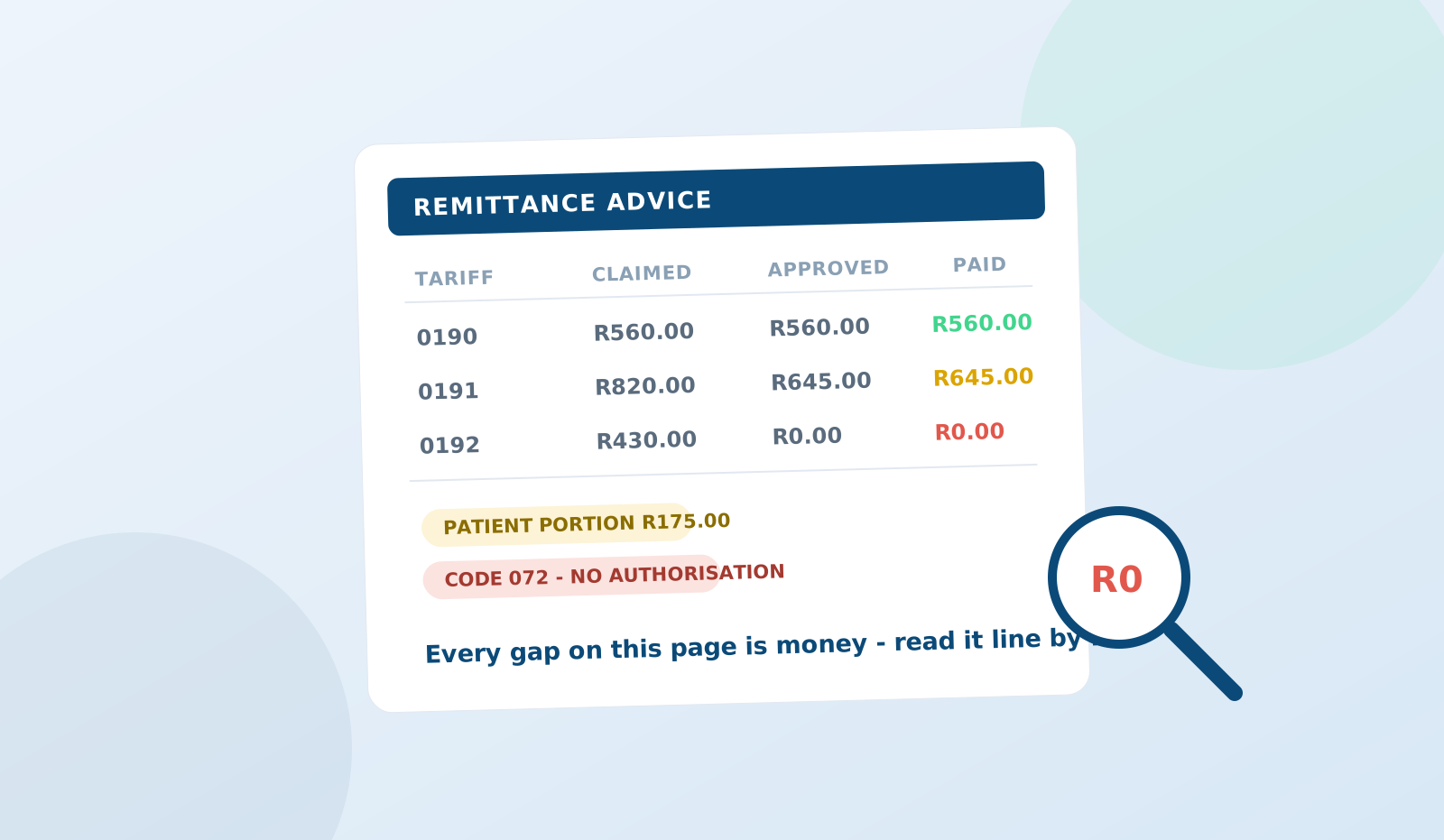
The remittance advice is the scheme's answer to everything you billed: what it approved, what it paid, what it bounced, and what it expects the patient to pay. It's also the document most practices skim - which is exactly where short payments and quiet write-offs hide.
Here's how to read one properly, line by line, and what to do about each thing you find.
The columns that matter
- Claim / reference number - ties the line back to the claim you submitted. If you can't match it, that's your first red flag.
- Member and dependant - who the service was for. A wrong dependant code is a classic rejection cause.
- Service date and tariff code - what was done and when. The scheme adjudicates against this code, not your description.
- Amount claimed - what you billed.
- Amount approved - what the scheme accepts as payable for that code, at its rate.
- Amount paid - what actually lands in your account on this payment run.
- Patient portion - the gap the member must pay you directly.
- Reason / rejection codes - the scheme's shorthand for why a line was reduced, rejected or reversed.
Claimed vs approved vs paid - why they differ
The three amounts on a healthy line are often not equal, and each gap means something different:
- Claimed > approved: the scheme pays its own tariff rate. The difference is either a patient portion (recoverable from the member) or, if you've contracted at scheme rates, a write-down.
- Approved > paid: usually a benefit issue - the member's savings or day-to-day benefit ran out mid-claim, shifting the balance to the patient.
- Paid = R0 with a reason code: a rejection or reversal. This line is work, not history - it needs a fix and a resubmission while the window is open.
Reason codes: where the money leaks
Every reduced or unpaid line carries a code. The dangerous ones are the quiet ones - a benefit-exhausted code on a line you assumed was paid, or a reversal of a claim you were paid for last month, netted off against this run. Work through them the week the advice arrives:
- Match every line on the advice to a submitted claim - anything unmatched needs investigation.
- Flag every line where paid < approved - decide: patient portion to bill, or error to correct.
- Fix and resubmit rejections immediately - they're only recoverable inside the scheme's submission window.
- Check reversals against prior payments - a reversal without a matching original is a query to the scheme.
- Bill patient portions the same week - recovery rates fall fast once the visit is a memory.
The easier way: track it against the claim, not the paper
All of this is reconciliation - matching what came back to what went out. NetPractice does the matching for you: every claim is submitted in real time and its accepted, rejected, reversal and paid amounts are recorded against the claim itself, so you see each claim's story in one place instead of hunting through scheme paperwork. Rejections surface the day they happen - not when the remittance advice finally gets read.
It's free under 11 claims a month, then a flat R9.50 per claim.
Frequently asked questions
Why is the paid amount less than I claimed?
Scheme tariff rates, depleted benefits, or a patient portion - the line's reason code tells you which. The key is noticing the gap while it's still actionable.
Do I have to chase patient portions?
They're your money - the scheme has formally allocated that amount to the member. Bill it promptly; it only gets harder with time.
Stop skimming remittance advices. See every claim's accepted, rejected and paid status live with NetPractice - free to start →